

News




0102030405
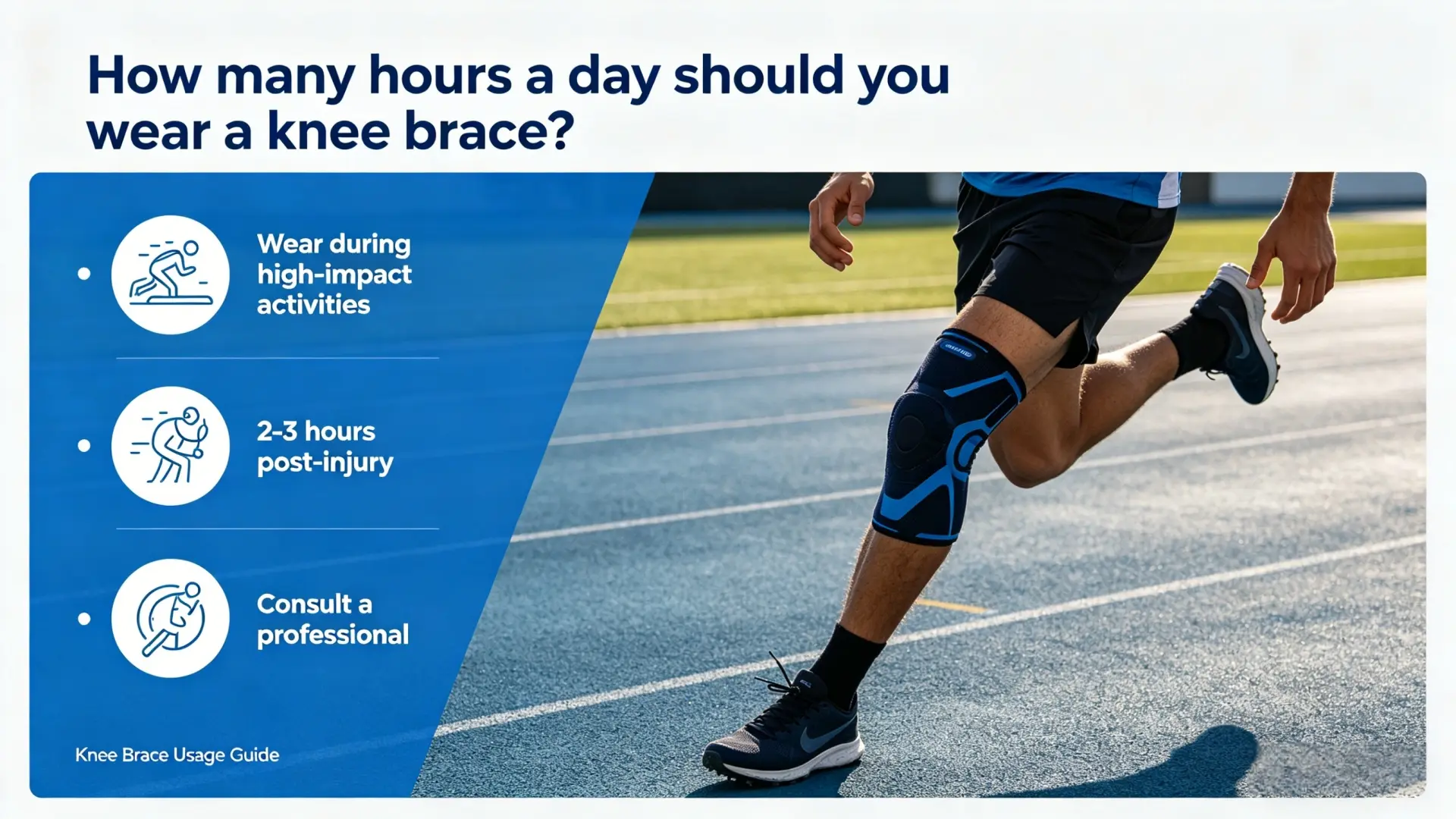
How Many Hours a Day Should You Wear a Knee Brace?
2026-04-16
Wearing A Knee Brace is a balancing act: too little fails to protect, while too often risks muscle atrophy, stiffness, or skin irritation. Below is ascience-backed, scenario-specific guide to daily wear time, aligned with clinical guidelines from the American Academy of Orthopaedic Surgeons (AAOS) and sports medicine best practices.
Why Timing Matters: Understanding the balance between protection and muscle dependency.
Core Principles: Why Timing Matters
- Muscle Health: Continuous wear >6 hours reduces quadriceps activation by 12–15%, weakening the knee's natural stabilizers.
- Skin & Circulation: >8 hours daily raises risks of redness, itching, or impaired blood flow.
- Recovery Phases: Timing shifts with healing—protect early, mobilize gradually, wean off as stability returns.
Scenario-Specific Recommendations
| Scenario | Daily Wear Time | Key Guidelines | Evidence Base |
|---|---|---|---|
| Post-Surgery Recovery (ACL/Meniscus) | 6–8 hours (activity-focused) | Locked hinge brace for first 1–2 weeks (weight-bearing only); unlock for ROM after 2 weeks. Remove for sleep unless prescribed. | AAOS: Hinged bracing reduces shear stress by up to 60% during critical healing phases. |
| Acute Injury (Sprain/Strain) | 2–4 hours (during activity) | Avoid continuous wear >3 hours to prevent muscle inhibition. Use only during walking, stairs, or light exercise. | AAOS: Limited bracing (1–2 weeks for Grade I sprains) speeds recovery without compromising stability. |
| Chronic Pain (Osteoarthritis) | 4–6 hours (high-stress days) | Wear during running, climbing, or long standing; skip during sedentary hours. Rotate with as-needed use on low-activity days. | AAOS: Moderate-evidence support for braces improving pain/function in OA patients. |
| Preventative Use (Athletes) | 1–2 hours (pre/post-training) | Use during heavy lifts, cutting, or pivoting; avoid daily dependency. Pair with strength training for long-term protection. | Sports medicine consensus: Targeted use reduces reinjury risk by 30% without muscle weakening. |
| Compression Sleeves | Max 3–4 hours | Ideal for post-workout recovery; avoid all-day wear to preserve circulation. | Clinical studies: >4 hours daily shows no added benefit and increases skin irritation risk. |
Step-by-Step Weaning Plan (4–8 Weeks)
- Phase 1 (Weeks 1–2): 6–8 hours/day (activity-only)
- Wear during all weight-bearing tasks; remove for rest/sleep.
- Phase 2 (Weeks 3–4): 3–4 hours/day
- Only during high-impact activities (running, sports).
- Phase 3 (Weeks 5–8): 1–2 hours/day
- Use only during intense workouts; discontinue for daily walking.
- Phase 4: Discontinue
- Stop when pain-free, stable, and able to perform a straight-leg raise without lag.
Critical Safety Checks
- Stop if: Increased pain, swelling, numbness, or skin irritation occurs—adjust tightness or take a 15-minute break.
- Never wear overnight (except post-surgery per provider order) to avoid muscle loss and poor circulation.
- Size Matters: A proper fit should feel snug but not tight—2 fingers should slide under the strap.
- Pair with Rehab: Strengthen quads (wall sits, straight leg raises) to reduce dependency and build long-term stability.
FAQs Answered
Q: Can I wear a knee brace all day for chronic pain?
No. AAOS recommends limiting OA-related wear to 4–6 hours on high-stress days. All-day use leads to muscle weakening and reduced mobility over time.
Q: How long should I wear a brace after ACL surgery?
4–6 weeks of activity-focused wear (6–8 hours/day initially, tapering to 1–2 hours). Most providers discontinue bracing once quad control and full ROM are achieved (6–8 weeks total).
Q: Is wearing a brace bad for my knees long-term?
Only if overused. Short, targeted wear protects without harm. Combine with strength training to build natural knee stability—braces are tools, not permanent solutions.