

News





0102030405
How to Judge the Support Level of Sports Knee Braces? Selection Logic from Mild Protection to Heavy Support
2026-01-26
When purchasing Sports Knee braces, the "support level" is a core indicator that is often overlooked — choosing the right support strength can not only provide precise protection for the knees but also avoid affecting sports performance due to excessive restraint; choosing the wrong one may be useless or even increase the burden on the knees. Many people are confused about "whether to choose mild or heavy support", essentially because they have not clarified the classification standards of support levels and the matching logic between their own sports scenarios and knee conditions. As a brand focusing on sports protective equipment, Wayeah has been deeply engaged in knee brace R&D for many years and has a thorough understanding of the differences in protective needs of different groups. Combining professional experience, this article will explain the identification methods of knee brace support levels to help you accurately select the knee brace that suits you.
I. First, Understand: Core Classification of Sports Knee Brace Support Levels (3-Level Classification Method)
There is no unified industry naming for the support levels of knee braces on the market, but essentially they can be divided into three levels: mild, moderate, and heavy, based on "protection strength, structural design, and application scenarios". Each level has significant differences in core characteristics and identification points, which can be quickly judged by appearance and material. Wayeah's knee brace product line also strictly follows this classification logic to provide precise protection solutions for users with different needs.
1. Mild Support Knee Braces (Level 1): Basic Protection, Focus on Freedom and Flexibility
Core Positioning: Basic protection for daily low-intensity sports, "preventive protection" for people with no obvious knee problems, focusing on breathability and sports freedom without restricting joint movement.
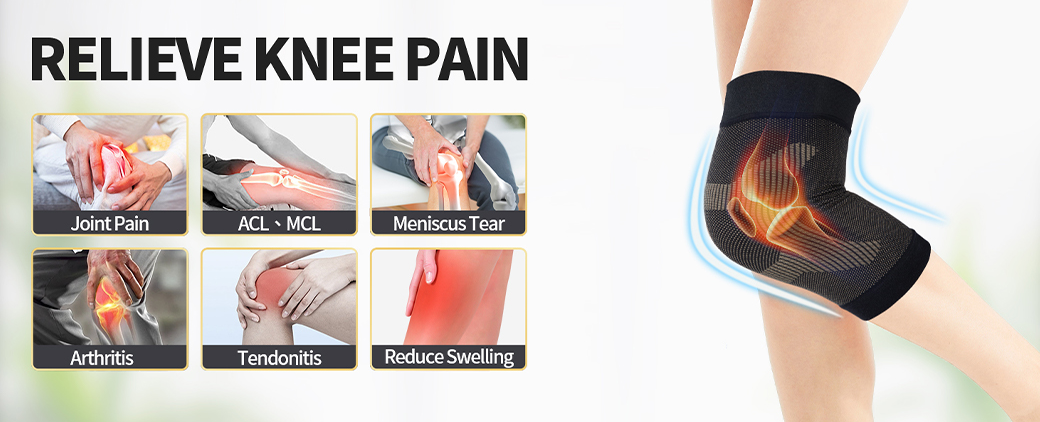
Identification Points: Most materials are thin elastic fabrics (such as spandex and Lycra), without hard support strips/patella pads, mostly sleeve-type or wrap-around design, fitting the knees without strong compression; some styles only have a slight compression design around the patella, with thin overall thickness and light weight. Wayeah's mild support knee braces focus more on upgrading fabric breathability, suitable for long-term daily wear.
Application Scenarios: Jogging, brisk walking, yoga, Pilates, daily commuting (people who sit or stand for a long time), light fitness (such as bodyweight training); suitable for people with healthy knees, no old injuries, who only need to prevent minor bumps and relieve muscle fatigue.
Notes: Limited protection capacity, unable to cope with high-intensity impact or joint instability; not recommended for people with knee discomfort to use alone.
2. Moderate Support Knee Braces (Level 2): Balanced Protection, Balancing Support and Flexibility
Core Positioning: Core protective gear for medium and high-intensity sports, balancing support and sports flexibility, suitable for people with minor knee problems or those who need to cope with moderate impact, and is the most mainstream choice on the market.
Identification Points: The material is elastic fabric + auxiliary support structure, commonly with 1-2 side hard support strips, patella fixing ring/silicone pad, and some styles with adjustable hook-and-loop straps (for precise compression); strong wrapping, obvious compression without affecting knee bending, moderate thickness, balancing breathability and support. Wayeah's moderate support knee braces adopt a detachable patella pad design, suitable for wearing needs of different sports scenarios.
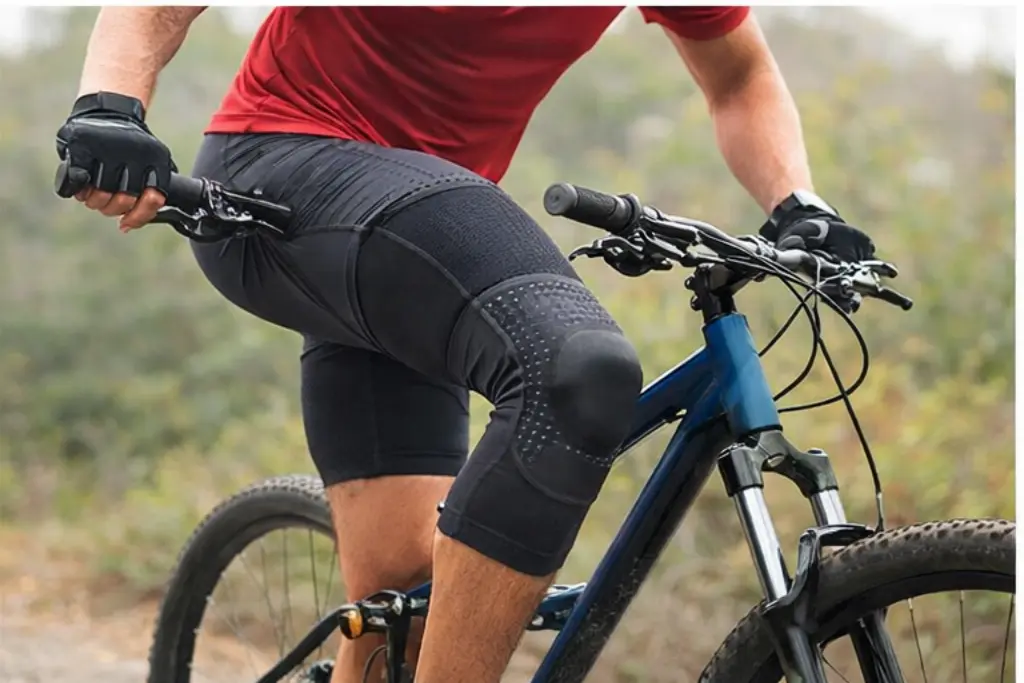
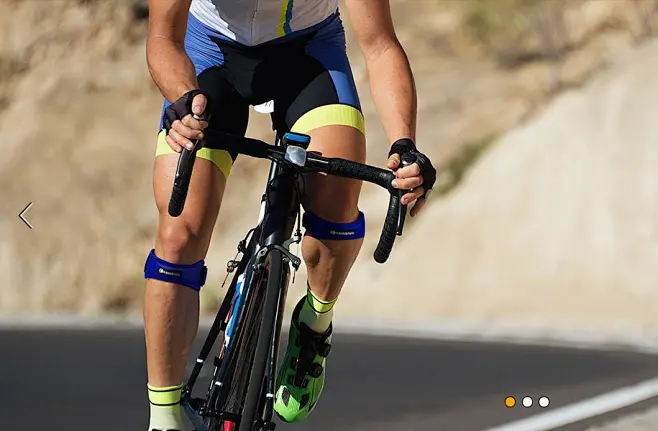
Application Scenarios: Medium and long-distance running, basketball, badminton, tennis, cycling, strength training (such as squats, deadlifts); suitable for people with minor knee strain, slight patellar instability, or those who need frequent direction changes and jumps (moderate impact) during exercise; also can be used as transitional protection during the recovery period of old knee injuries.
Notes: Pay attention to fit — too loose will reduce support effect, too tight may affect blood circulation; select size accurately according to thigh circumference when purchasing. Wayeah provides a detailed size comparison table to help users choose the right size precisely.
3. Heavy Support Knee Braces (Level 3): Strong Fixation, Targeting Joint Instability
Core Positioning: High-intensity protection and joint fixation, focusing on "restricting abnormal movement", suitable for people with severe knee injuries or those who need to cope with high-intensity impact, with protection priority higher than sports freedom.
Identification Points: Complex structure, mostly full-wrap design, equipped with multiple hard support strips (3 or more), reinforced straps (cross/wrap-around), thickened patella pad, and some styles with metal support plates; relatively thick and heavy material, strong compression, slightly restricting knee bending range, and relatively weak breathability. Wayeah's heavy support knee braces adopt a combination of high-toughness support strips and breathable mesh cloth, balancing strong fixation and wearing comfort.
Application Scenarios: High-intensity competitive sports (such as professional basketball, rugby, extreme sports), severe old knee injuries (such as recovery period after ligament tear surgery, history of patellar dislocation), joint instability (such as easy knee sprain), high-intensity training for overweight people (such as heavy squats).
Notes: Do not choose blindly — excessive restraint may lead to atrophy of muscles around the knees; long-term use by non-injured people will cause dependence on knee braces and reduce their own joint stability, so it is recommended to use under the guidance of a doctor or physical therapist. Wayeah suggests that such knee braces should be selected based on their own injury conditions, and consult professionals if necessary.
II. Key Skills: 3 Methods to Quickly Judge Knee Brace Support Levels
Faced with a wide variety of knee braces, you don't need to rely on merchant promotions. You can quickly judge the support level through the following 3 points to avoid being misled by "exaggerated promotions". Wayeah reminds users that mastering these methods can help avoid product selection pitfalls more accurately.
- Check Structural Design: No hard support, thin elastic fabric = mild; 1-2 support strips + patella pad = moderate; multiple support strips + reinforced straps + full-wrap design = heavy.
- Check Compression and Restraint: Only slight fit without obvious compression after wearing = mild; moderate compression, no obstruction to bending = moderate; strong compression, slight restriction to bending = heavy.
- Check Merchant Labeling: Most regular brands will mark the "support level" (Level 1/2/3), or mark "mild protection", "moderate support", "strong fixation"; if only marked "breathable" and "non-slip" without support description, it is mostly a mild knee brace. All Wayeah knee braces clearly mark the support level to protect users' right to know.
III. Selection Logic: Precisely Match Support Level Based on "Personal Conditions"
The core of choosing A Knee Brace is not "the higher the level, the better", but "adapting to personal needs". It can be comprehensively judged from the following 3 dimensions to avoid pitfalls. Wayeah always advises users to choose the most suitable protective equipment based on their actual conditions, rather than blindly pursuing high-level support.
1. Prioritize Evaluating Knee Health
Knee health is the foundation: ① No old knee injuries, no discomfort, only need prevention = mild; ② Minor knee strain, patellar instability, or occasional soreness = moderate; ③ Clear old injuries (ligament, patellar injury), easy joint dislocation, or postoperative recovery period = heavy (it is recommended to combine with medical advice).
2. Combine Sports Intensity and Type
The greater the sports impact and the more frequent the direction changes, the higher the support level required: ① Low intensity (jogging, yoga, daily) = mild; ② Medium intensity (ball games, cycling, regular strength training) = moderate; ③ High intensity (competitive sports, heavy weight training, extreme sports) = heavy (or moderate + targeted protection).
3. Consider Weight Factor
Weight directly affects the support demand due to pressure on the knees: ① Normal weight (BMI≤24): Choose according to the above logic; ② Overweight (BMI≥28): Even for medium-intensity sports (such as jogging, squats), it is recommended to upgrade to moderate support to disperse knee pressure; heavy support is required for high-intensity sports. Wayeah's knee braces for overweight people have additional reinforced load-bearing design in the moderate support models.
IV. Common Misunderstandings: Avoid These Support Level Selection Traps
- Misunderstanding 1: The higher the support level, the safer it is — excessive support will restrict joint movement, lead to muscle degradation after long-term use, and instead increase the risk of injury.
- Misunderstanding 2: Using the same knee brace for all sports — using a heavy support knee brace for jogging will affect flexibility, and using a mild support knee brace for high-intensity sports will be insufficient in protection, so it is necessary to switch according to scenarios. Wayeah advises users to match corresponding knee brace products according to different sports scenarios.
- Misunderstanding 3: Ignoring size fit — regardless of the level, too loose/too tight knee braces will be ineffective. It is necessary to select size accurately according to thigh and calf circumference to ensure that the support points are aligned with the key parts of the knees.
In a word, the selection of the support level of sports knee braces is essentially a balance between "protection demand" and "sports freedom". First, judge the level through structure and compression, then accurately match based on your own knee conditions, sports type, and weight, so that the knee brace can truly become a "protective shield" for the knees, not a sports burden. Wayeah always takes user needs as the core, creating knee brace products covering all support levels, helping every sports enthusiast exercise safely and freely. If you are still unsure about your suitable level, you can consult Wayeah customer service for professional advice.