Top 10 Tips for Choosing the Right Knee Compression Sleeve for You
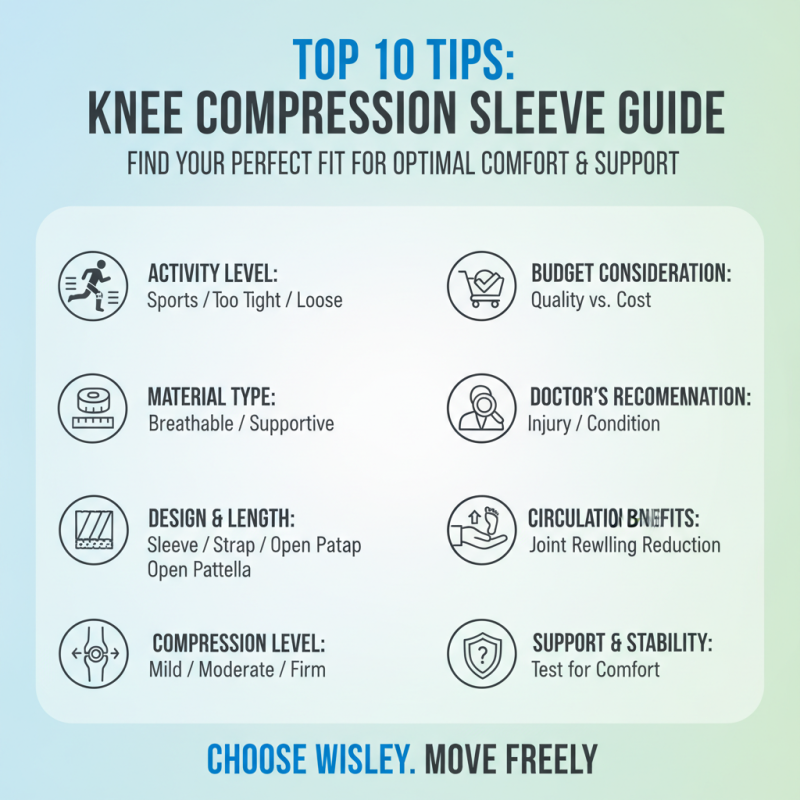
Choosing the right knee compression sleeve can be challenging. Many factors influence your decision, making it essential to understand your needs. A knee compression sleeve can provide support, improve circulation, and reduce swelling.
When searching for the perfect sleeve, consider your activity level. Will you wear it during sports or daily activities? Selecting the right size is also crucial. A sleeve that is too tight can cause discomfort, while one that is too loose won't offer proper support.
It's essential to explore different materials and designs to find what works for you. Sometimes, personal preferences can lead to mistakes. Many overlook the importance of trying on various options. Take your time to ensure a better fit. Ultimately, this decision can affect your mobility and comfort greatly. Choose wisely.
Understanding the Purpose of Knee Compression Sleeves
Knee compression sleeves can offer significant benefits for individuals dealing with knee pain or instability. They function primarily by providing support and stabilizing the joint. When you wear a compression sleeve, it helps enhance blood flow. This can reduce swelling and promote healing after injury. People often experience increased comfort during physical activities.
The materials used in knee sleeves matter. A breathable fabric allows you to wear it for extended periods. However, some may find certain materials irritating to their skin. Choosing a sleeve that fits well is crucial. A loose sleeve won't provide adequate support, while a tight one can hinder circulation. Many users also appreciate that these sleeves can be worn discreetly under clothing.
It’s important to reflect on your specific needs. Do you want additional warmth? Or do you prioritize maximum mobility? These questions can guide your choice. Experimenting with different compression levels may be necessary. Finding the right balance may take time. Each person’s experience can vary widely, so patience is essential during this process.
Identifying Your Specific Knee Health Needs
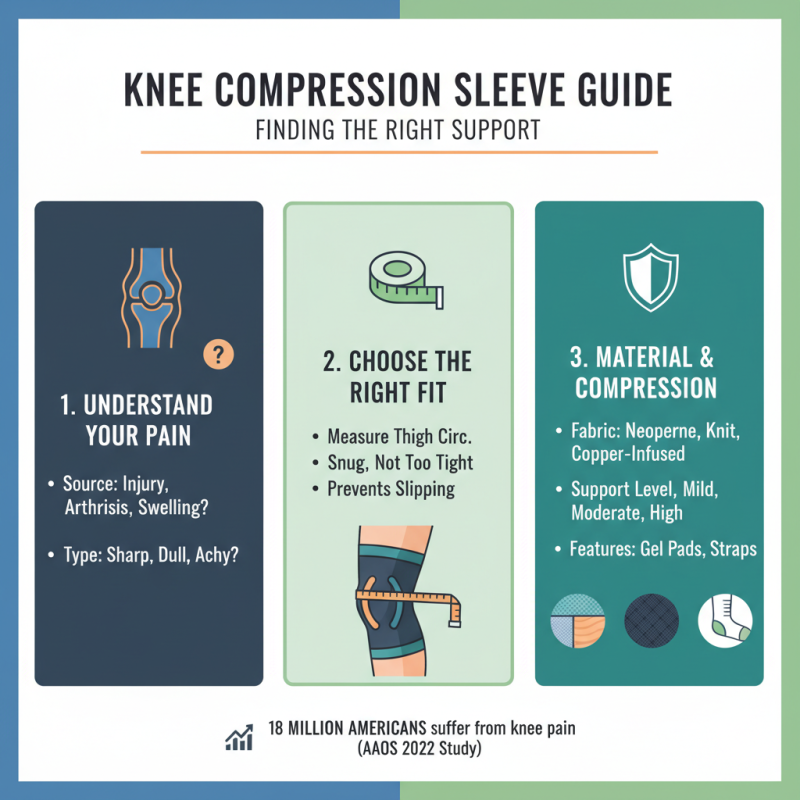
Choosing the right knee compression sleeve can be daunting. Understanding your specific knee health needs is crucial. According to a 2022 study by the American Academy of Orthopedic Surgeons, around 18 million adults suffer from knee pain in the U.S. alone. Identifying the source of your discomfort is the first step toward effective treatment.
If you have osteoarthritis, a sleeve with moderate compression may help reduce swelling and improve mobility. Research shows that compression can enhance blood flow, aiding recovery. However, not every sleeve fits every condition. Some people may find sleeves too tight, leading to discomfort or exacerbated pain. Tailoring to your individual needs can be challenging but necessary.
For athletes, a compression sleeve that offers targeted support is vital. A study published in Sports Medicine found that appropriate compression can reduce muscle fatigue and improve performance. Yet, choosing a sleeve requires personal reflection. Ask yourself: Do I need consistent support or just mild compression during activity? Your answers will guide you to the right choice.
Evaluating Material and Design Features of Compression Sleeves
When considering a knee compression sleeve, material and design features play crucial roles. Look for high-quality fabrics that provide effective compression. Breathability is essential—this ensures comfort during prolonged wear. A blend of nylon and spandex often works well. Some sleeves feature moisture-wicking properties, keeping your skin dry.
Design matters too. Opt for sleeves that offer targeted compression around the knee joint. This can enhance support and stability. Pay attention to the fit as well; a snug fit without being too tight is ideal. Consider additional features such as reinforced stitching for durability. Some designs may include non-slip technology, which helps in maintaining the sleeve’s position during activities.
It’s important to remember that not all sleeves will suit everyone. Some users find certain materials irritating. This requires testing to ensure you are comfortable. Also, different activities may call for varied levels of compression. What works for running may not be ideal for weightlifting. Take time to evaluate and reflect on your specific needs before making a choice.
Sizing and Fit: Finding the Right Fit for Optimal Support
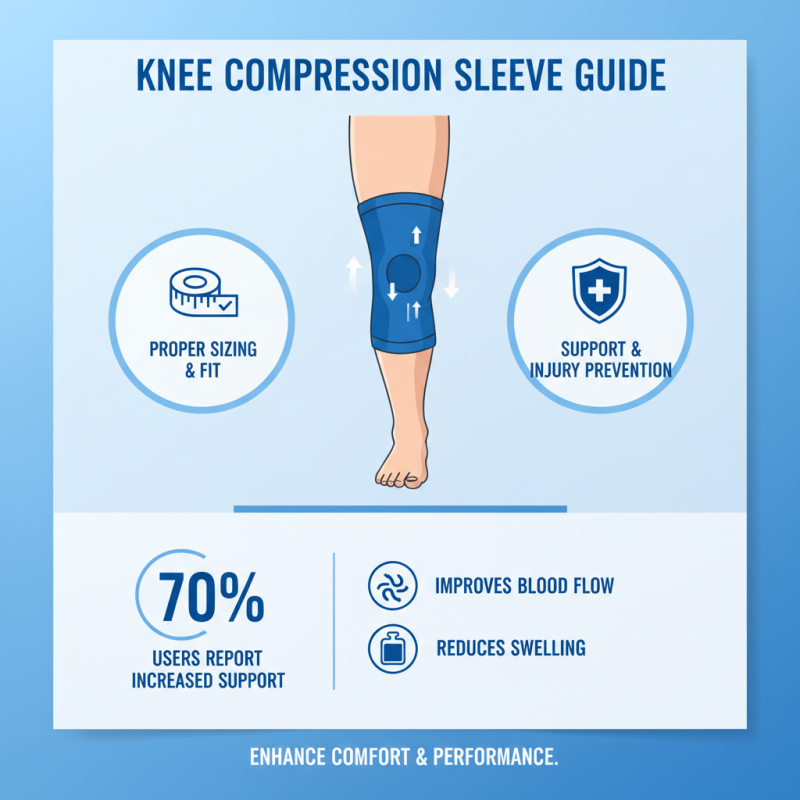
Choosing the right knee compression sleeve is essential for support and injury prevention. Proper sizing and fit can greatly enhance your comfort and performance. Research indicates that approximately 70% of users report increased support when wearing a fitting sleeve. A snug fit allows for better compression, which helps improve blood flow and reduces swelling.
When selecting a knee sleeve, pay attention to sizing charts. Measure the circumference of your knee and compare it to the manufacturer's guidelines. A sleeve that is too tight can restrict circulation. Conversely, a loose fit may not provide adequate support. It's crucial to strike a balance between comfort and compression.
Consider your body shape. Many individuals find themselves between sizes. If you’re unsure, it may be wise to choose the larger option for comfort. Compression should not cause pain. Listen to your body; if you feel discomfort, reassess your choice. Compression sleeves should be snug yet breathable, allowing for mobility during activities. A good fit promotes optimal support, so take your time in selecting the right one.
Exploring Brand Reputation and Customer Reviews for Reliability
When it comes to choosing a knee compression sleeve, brand reputation and customer reviews play a vital role. A recent industry report suggests that about 70% of consumers rely on online reviews before making a purchase. This highlights the importance of thorough research. A product with a high rating may signal quality, but not all top-rated items meet everyone’s needs.
Understanding customer feedback is crucial. Many reviews share personal stories about effectiveness and comfort. However, it is essential to recognize that experiences vary widely. What worked well for one person might not work for another. For instance, some users report that certain sleeves caused discomfort after prolonged wear.
Moreover, an interesting statistic shows that 60% of users prefer sleeves that provide both support and breathability. While this information can guide choices, individual anatomy and activity levels must also be considered. An effective sleeve for a weekend runner may not serve someone who requires daily support during extended periods of standing. Reflecting on these nuances can help you avoid regret later and make a more informed decision.